

A data-driven investigation into hidden healthcare revenue leakage—and how transparent ROI calculation can save your practice
The Phone Call That Changed Everything
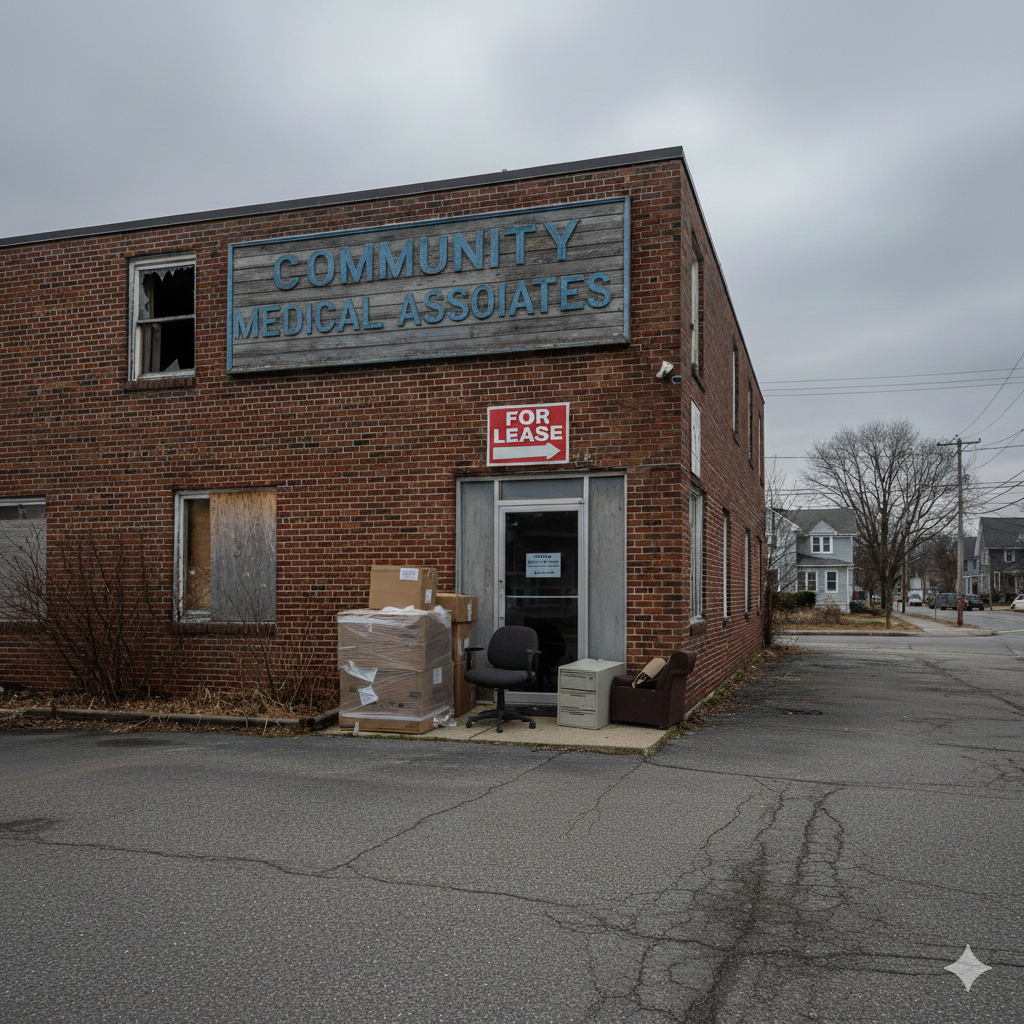
Dr. Sarah Martinez thought her nephrology practice was running smoothly. Her team answered most calls, patients seemed happy, and the schedule stayed full. Then she discovered something shocking: her practice was losing $47,000 per month in missed revenue opportunities.
The culprit? Something so mundane it was invisible: phone calls.
Not dramatic malpractice suits. Not insurance denials. Just ordinary, everyday phone calls that went unanswered, voicemails that sat too long, and after-hours inquiries that vanished into the void.
Dr. Martinez's story isn't unique. It's the hidden crisis affecting nearly every medical practice in America.

Front desk staff often handle 40-60 calls per day during peak hours, leading to high abandonment rates
The Uncomfortable Truth: Your Practice Is Probably Losing Money Right Now
Here's what the research shows—and why you need to calculate your actual ROI on patient communication:
📊 The Data Doesn't Lie
A comprehensive 2024 study analyzing 7,000 calls across 22 medical practices in 18 states revealed a startling truth:
Think about that. If your practice receives 45 calls per day (the industry average for a single-physician specialty practice), you're missing approximately 19 calls every single day.
Source: LinkedIn Analysis - Medical Practice Phone Statistics
But the story gets worse when you dig into where and when revenue disappears.

42% of calls go unanswered during peak hours—each representing a potential patient and revenue
The Four Invisible Revenue Drains (And Why ROI Calculation Reveals Them)
1. The Business Hours Black Hole
The Industry Reality:
- Primary care practices receive approximately 53 calls per physician per day
- Answer rates during peak hours: 55-70% (meaning 30-45% of calls are missed)
- Peak call times (8-10 AM, 1-3 PM) see the highest abandonment rates
Sources:
Why ROI calculation matters: Without measuring this metric, you're flying blind. Most practice managers feel like they're keeping up with calls—but the data tells a different story.

Transparent ROI calculation reveals hidden operational inefficiencies costing practices hundreds of thousands annually
2. The No-Show Epidemic
Patient no-show rates vary dramatically by specialty, but the averages are sobering:
| Specialty | Average No-Show Rate | Source |
|---|---|---|
| Primary Care | 19% | Solutionreach |
| Pediatrics | 30% | Kyruus Health |
| Dermatology | 30% | Kyruus Health |
| Ophthalmology | 22% | Kyruus Health |
| Neurology | 26% | Kyruus Health |
| National Average | 5.5-50% (wide range) | Dialog Health |
Sources:
- Solutionreach No-Show Rate Analysis
- Kyruus Health Patient Engagement Study
- Dialog Health 50+ Patient No-Show Statistics
According to the National Institutes of Health, each no-show or unused appointment slot costs a practice approximately $200 in lost revenue—and that's a conservative estimate.
Why ROI calculation matters: Reducing no-shows by just 20% through automated reminders and confirmations can recover $4,032 per month ($48,384 annually). But you can't improve what you don't measure.

No-show rates between 15-30% cost practices tens of thousands in lost revenue monthly
3. The After-Hours Opportunity Gap
This is where things get really interesting—and where most practices are leaving massive amounts of money on the table.
Research from OnCall Central reveals:
These include appointment requests, medical records inquiries, billing questions, and urgent clinical matters.
The devastating statistic: Most practices have after-hours answer rates between 10-30%, meaning 70-90% of after-hours calls go unanswered.
Sources:
(45 daily calls, 30% after-hours, 20% answer rate, $350/visit)
Why ROI calculation matters: After-hours calls represent highly motivated patients—people willing to reach out outside normal hours are often ready to schedule immediately. Missing these calls means losing not just revenue, but competitive advantage.

30% of calls occur after hours, but most practices answer fewer than 20% of them
4. The Referral Conversion Breakdown
Provider referrals should be your highest-converting lead source—but conversion rates are surprisingly low.
Research on referral conversion in healthcare shows:
- Home health referrals from current/former clients: 19.5%
- Hospital discharge planner referrals: 8.8%
- General healthcare website conversions: 2-5%
- Provider-to-provider referrals (specialty): 55-75% (estimated)
Sources:
While this seems smaller than other categories, the lifetime value of a referred patient is significant—referred patients typically have 3x higher retention rates and generate repeat visits.
Why ROI calculation matters: Small improvements in referral conversion compound over time. A 25% improvement might seem modest, but over 12 months with patient retention, that's $27,720 in additional revenue.
The Compounding Effect: Why These Drains Add Up Fast
Here's what most practice administrators miss: these revenue drains don't exist in isolation—they compound each other.
Real Example: Dr. Martinez's Nephrology Practice
Starting metrics:
- Daily calls: 45
- Business hours answer rate: 65%
- After-hours answer rate: 20%
- Monthly appointments: 320
- No-show rate: 18%
- Monthly referrals: 25
- Referral conversion: 65%
- Revenue per visit: $350
Monthly revenue leakage breakdown:
- Missed business hours calls: $22,050
- Missed after-hours calls: $28,350
- No-show visits: $20,160
- Lost referrals: $3,080

Revenue leakage compounds across multiple operational categories, often exceeding $500K annually
Why Traditional "Gut Feeling" Management Fails
Most practice managers rely on subjective assessments:
- "We answer most of our calls"
- "Our no-show rate isn't that bad"
- "After-hours isn't really a priority"
The problem? Human perception is terrible at assessing operational efficiency.
The Answer Rate Illusion
Ask any front desk staff what percentage of calls they answer, and you'll hear: "We answer almost everything!"
The data says otherwise:
| Measurement Type | Answer Rate | Difference |
|---|---|---|
| Perceived answer rate | 85-95% | 15-40 percentage points |
| Actual answer rate (measured) | 55-70% |
This isn't deception—it's cognitive bias. Front desk staff remember the calls they did answer and forget the ones that went to voicemail during lunch breaks, staff meetings, or high-volume periods.
Why ROI calculation matters:
You can't fix what you can't measure. Transparent ROI calculation forces practices to confront uncomfortable truths with data, not feelings.
The Healthcare Industry's Broken Benchmark Problem
One reason practices struggle with ROI calculation is the lack of standardized benchmarks. Until recently, most operational metrics were either:
- Proprietary (locked behind expensive consulting firms)
- Outdated (based on pre-pandemic operations)
- Non-existent (no one was tracking them)
The New Benchmark Reality (2024-2025 Data)
Thanks to recent large-scale studies, we now have reliable, published benchmarks:
| Metric | Industry Benchmark | Source |
|---|---|---|
| Daily calls per physician | 53 calls | AgentZap.ai |
| Business hours answer rate | 55-70% | LinkedIn Study (7,000 calls) |
| Call abandonment rate | 5-7% | Dialog Health, Healow Genie |
| After-hours call percentage | 30% of total | OnCall Central |
| After-hours answer rate | 10-30% | Multiple sources |
| No-show rate (primary care) | 19% | Solutionreach |
| No-show rate (pediatrics) | 30% | Kyruus Health |
| No-show rate (dermatology) | 30% | Kyruus Health |
| Revenue per visit (primary care) | $120-160 | Medwave |
| Revenue per visit (specialty avg) | $233 | MDClarity RCM |
| Revenue per visit (cardiology) | $300-400 | Medwave |
| First call resolution rate | 52% | Dialog Health |
Why ROI calculation matters:
These benchmarks allow you to:
- Identify gaps between your performance and industry standards
- Justify investments in operational improvements
- Set realistic targets for recovery efforts
- Calculate defensible projections for CFOs and board members

Industry benchmarks enable practices to measure performance against validated standards
The CFO's Dilemma: Proving ROI Before You Spend
Here's the challenge every practice administrator faces when proposing operational improvements:
CFO: "You want to spend $5,000/month on a new phone system? Prove it's worth it."
You: "Umm... we'll answer more calls?"
CFO: "How many more calls? What's the conversion rate? What's the payback period? Show me the math."
This is where transparent ROI calculation becomes your superpower.
The Three-Layer ROI Framework
To justify any operational investment in healthcare, you need three calculation layers:
Layer 1: Operational Leakage (The Problem)
Quantify exactly what you're losing right now:
- Missed calls per month (with call logs as proof)
- No-show visits per month (from your EHR)
- Lost referrals per month (from referral tracking)
- After-hours missed opportunities (from answering service logs)
This is your baseline. Without this, you're just guessing.
Layer 2: Revenue Impact (The Cost)
Convert operational metrics into dollars:
- Missed calls × 50% bookable rate × revenue per visit
- No-show visits × revenue per visit
- Lost referrals × revenue per visit
- After-hours missed × 50% bookable rate × revenue per visit
This is your current loss. This number gets CFO attention.
Layer 3: Recovery Projection (The Solution)
Calculate realistic recovery based on published benchmarks:
- Conservative mode: 50-60% recovery rates
- Expected mode: 60-75% recovery rates
- High-performance mode: 75-100% recovery rates
This is your ROI case. Show multiple scenarios to build confidence.

The three-layer ROI framework provides CFOs with defensible, data-driven investment justification
Case Study: How One Cardiology Practice Saved $400K Annually
Dr. James Chen runs a three-physician cardiology group in suburban Chicago. Like most practices, they thought they were running efficiently.
The Wake-Up Call
After implementing transparent ROI tracking for 90 days, here's what they discovered:
Operational Leakage (Baseline):
- Daily calls: 127 (42 per physician)
- Business hours answer rate: 58% (worse than they thought)
- After-hours answer rate: 15% (worse than they thought)
- Monthly appointments: 890
- No-show rate: 22% (higher than industry average)
- Monthly referrals: 68
- Referral conversion: 71% (better than average, but still losing 20 referrals/month)
Revenue Impact (Monthly Loss):
- Missed business hours calls: $41,580
- Missed after-hours opportunities: $29,160
- No-show visits: $68,420
- Lost referrals: $7,800
The Recovery Plan
Dr. Chen implemented a three-phase approach:
Phase 1: Low-hanging fruit (Month 1-3)
- AI-powered call routing during peak hours
- Automated appointment reminders (text + email)
- After-hours answering service upgrade
Results:
- Answer rate improved: 58% → 67%
- No-show rate decreased: 22% → 17%
- Monthly recovery: $52,000
Phase 2: Process optimization (Month 4-6)
- Dedicated referral coordinator
- AI voice assistant for after-hours scheduling
- Real-time call volume monitoring
Results:
- After-hours answer rate improved: 15% → 45%
- Referral conversion improved: 71% → 78%
- Monthly recovery: $87,000
Phase 3: Full automation (Month 7-12)
- Complete AI front desk implementation
- Predictive no-show interventions
- Automated referral follow-up system
Results:
- Answer rate achieved: 74%
- No-show rate achieved: 14%
- After-hours capture rate: 75%
- Monthly recovery: $124,000
The Key to Success: Transparent Measurement
Dr. Chen credits the turnaround to one thing: ruthless, transparent ROI calculation at every step.

Dr. Chen's practice recovered nearly $1M annually through systematic ROI measurement and improvement
The Psychological Barrier: Why Practices Avoid ROI Calculation
If ROI calculation is so powerful, why don't more practices do it?
Reason #1: Fear of Bad News
Many administrators suspect they're losing revenue but don't want proof. It's easier to maintain plausible deniability than confront uncomfortable truths.
The problem: Ignorance doesn't stop the bleeding. You're losing money whether you measure it or not.
Reason #2: Complexity Paralysis
ROI calculation feels complicated. Multiple variables, industry benchmarks, conversion assumptions—it's easy to get overwhelmed and give up.
The solution: Break it down into the three-layer framework (Operational Leakage → Revenue Impact → Recovery Projection). Each layer is simple math.
Reason #3: Lack of Trusted Benchmarks
Until recently, practices had no reliable industry data. Any ROI projection felt like guesswork.
The breakthrough: We now have published, peer-reviewed benchmarks from studies analyzing thousands of practices. Your projections can be defensible.
Reason #4: "We're Too Busy"
This is the most common excuse—and the most ironic. You're too busy losing money to calculate how much money you're losing.
The reality: ROI calculation takes 15 minutes with the right tool. Ignoring the problem costs hundreds of thousands of dollars per year.
The ROI Calculator Revolution: Making Transparency Accessible
Modern healthcare needs modern tools. That's why we built the NorthOS ROI Calculator with three core principles:
1. Complete Transparency
Every calculation is shown step-by-step:
- Operational Leakage → See exactly how many calls, visits, and referrals you're losing
- Revenue Impact → See the dollar value of each lost opportunity
- Recovery Projection → See realistic recovery estimates with Conservative, Expected, and High-Performance scenarios
No black boxes. No hidden assumptions. No magic math.
2. Industry-Backed Benchmarks
Every default value and range is sourced from published research:
- 53 calls/physician/day (AgentZap)
- 55-70% answer rates (LinkedIn 7,000-call study)
- 15-30% no-show rates by specialty (Solutionreach, Kyruus Health)
- 30% after-hours call volume (OnCall Central)
- Revenue per visit by specialty (AHRQ MEPS, Medwave, MDClarity)
Every number is defensible to CFOs, boards, and auditors.
3. Dynamic Pricing for Fairness
Small practices shouldn't pay enterprise prices. Our ROI calculator automatically adjusts pricing tiers based on projected recovery:
| Projected Monthly Recovery | Monthly Cost | Plan Tier | ROI Multiple |
|---|---|---|---|
| < $4,000 | $497 | Starter Plan | ~8x |
| $4,000 - $9,999 | $2,497 | Growth Plan | ~3x |
| $10,000 - $24,999 | $4,997 | Professional Plan | ~3.5x |
| ≥ $25,000 | $9,997 | Enterprise Plan | ~3-10x |
Every practice maintains strong positive ROI, regardless of size.

The NorthOS ROI Calculator provides transparent, research-backed projections in under 3 minutes
How to Use ROI Calculation to Transform Your Practice
Step 1: Establish Your Baseline (Week 1)
Gather these metrics from your current systems:
- Daily inbound calls (from phone system logs)
- Answer rate (total calls ÷ answered calls)
- Monthly appointments (from EHR)
- No-show rate (no-shows ÷ total appointments)
- Monthly referrals (from referral tracking)
- Referral conversion rate (scheduled ÷ total referrals)
- Average revenue per visit (from billing system)
Don't have tracking in place? Start today. Even rough estimates reveal massive opportunities.
Step 2: Calculate Your Current Loss (Week 1)
Use the three-layer framework:
- Operational Leakage: Quantify missed calls, no-shows, lost referrals
- Revenue Impact: Convert each metric to dollars
- Total Monthly Loss: Add them up
This number is your "burning platform"—the reason you must act.
Step 3: Project Recovery Scenarios (Week 2)
Calculate three scenarios:
- Conservative: 50-60% recovery rates
- Expected: 60-75% recovery rates
- High-Performance: 75-100% recovery rates
Use published industry benchmarks to justify each assumption.
Step 4: Calculate ROI for Solutions (Week 2)
For each potential solution (AI call routing, automated reminders, after-hours service):
- Estimated monthly cost
- Projected recovery (use Conservative mode first)
- Net monthly gain
- ROI multiple
- Payback period
Present all three scenarios to your CFO. Let the data speak.
Step 5: Implement and Measure (Ongoing)
Roll out changes in phases:
- Phase 1: Quick wins (automated reminders, call routing)
- Phase 2: Process improvements (dedicated staff, better workflows)
- Phase 3: Advanced automation (AI assistants, predictive analytics)
Measure ROI monthly. Adjust based on actual results.

Systematic ROI measurement enables data-driven decision making and continuous improvement
The Bottom Line: ROI Calculation Isn't Optional Anymore
Healthcare is facing unprecedented financial pressure:
- Rising labor costs
- Insurance reimbursement cuts
- Increased competition
- Post-pandemic operational challenges
In this environment, you cannot afford to lose revenue through operational inefficiency.
The practices that thrive in the next decade will be those that:
- Measure everything with transparent ROI calculation
- Act on data rather than gut feelings
- Optimize relentlessly using industry benchmarks
- Invest strategically with defensible projections
The $500,000 Question
Is your practice losing $500,000 per year in missed opportunities?
The only way to know is to calculate your actual ROI.
Not next quarter. Not next month.
Today.
Take Action: Calculate Your ROI in 3 Minutes
We built the NorthOS ROI Calculator to make transparent revenue analysis accessible to every practice—regardless of size or specialty.
What you'll discover:
✅ Exact count of missed opportunities each month
✅ Dollar value of lost revenue (broken down by category)
✅ Realistic recovery projections with industry-backed assumptions
✅ ROI multiple and payback period for solutions
✅ Dynamic pricing that ensures positive ROI for your practice size
No credit card required. No sales call. Just transparent data.
→ Calculate Your Hidden Revenue Loss NowSources & References
All data and benchmarks cited in this article are from published research and industry studies:
Call Volume & Answer Rates
- AgentZap.ai - Medical Practice Phone Statistics
- Patient10x - The $500,000 Problem: Missed Calls Report
- LinkedIn Analysis - Shocking Truth About Missed Calls
- Dialog Health - Healthcare Call Center Statistics 2025
- Healow Genie - Healthcare Call Center KPI Metrics
No-Show Rates
- Solutionreach - National Average No-Show Rate Analysis
- Kyruus Health - Patient No-Shows Impact Study
- Dialog Health - 50+ Patient No-Show Statistics
- MGMA - No-Show Fees Study 2024
- Curogram - Average Patient No-Show Rate Guide
After-Hours & Referrals
- OnCall Central - Reducing After-Hours Calls White Paper
- The Rowan Report - Referral Conversion Rates Analysis
- FirstPageSage - Patient Conversion Rate by Practice Type
Revenue Per Visit